Trump attributes Minnesota water system cyberattack to Governor Walz rather than Iran, contradicting federal intelligence assessment
A cyberattack targeted operational technology at more than 30 Minnesota community water systems on Sunday and Monday, July 27–28, disrupting automated operations in several communities including Braham, Plymouth, and South St. Paul. U.S. and state officials, as well as others familiar with the incident, assessed that Iranian hackers were likely behind the attack, though no definitive attribution has been made. President Trump, speaking at a Cabinet meeting at Camp David on Friday, July 31, rejected that assessment and attributed the incident to Minnesota Governor Tim Walz and the state's management.
Two sources · Thin corroboration
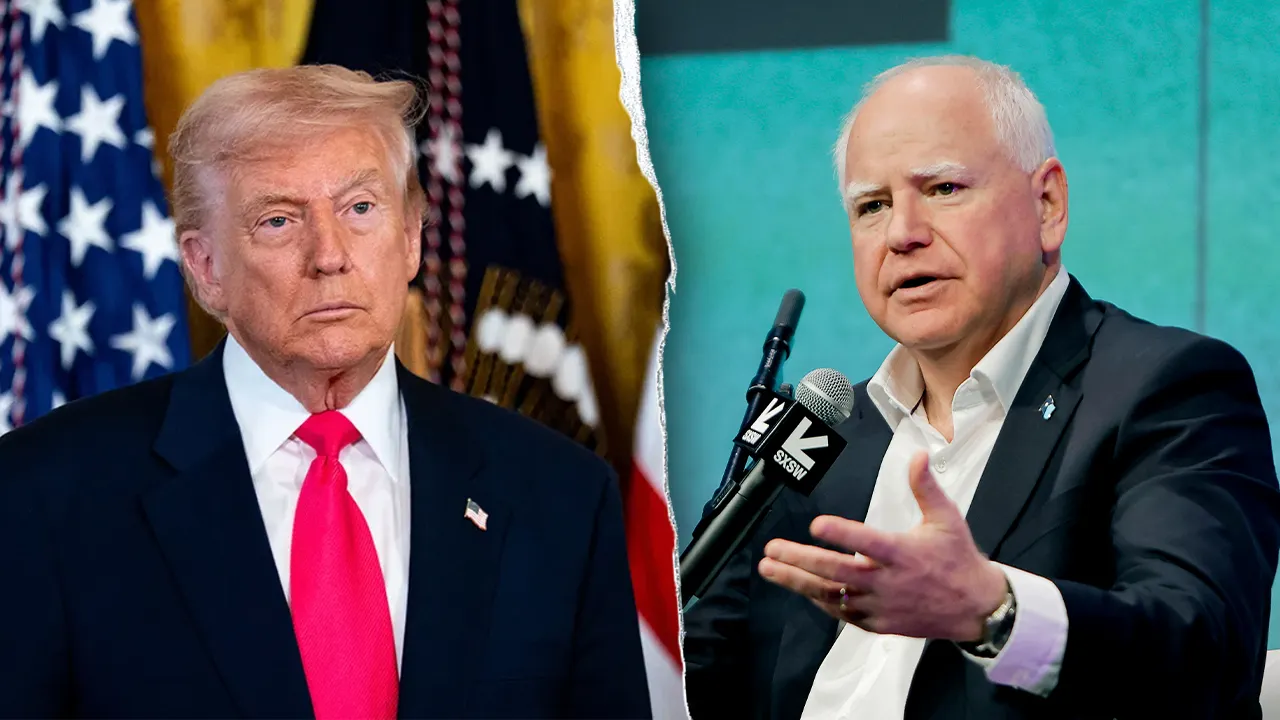
At a Cabinet meeting held at Camp David, President Trump said of the cyberattack: "I blame it on Minnesota because they're grossly incompetent. I would blame it on Minnesota and the governor, the corrupt governor of Minnesota. Iran's got bigger problems than worrying about Minnesota." The remarks placed him in direct tension with a preliminary intelligence assessment shared by U.S. and state officials indicating Iran was probably responsible.
U.S. intelligence agencies assessed that Iran was probably behind the Minnesota cyberattacks, according to several U.S. officials cited by the Washington Post. Minnesota IT Services said it had not yet determined a "specific actor" and described the probe as active. The FBI, when asked whether it believed Iran was responsible, declined to address that question directly, saying the agency was "fully engaged to protect critical infrastructure."
Federal agencies had warned just days before the Minnesota attacks that Iranian-affiliated hackers were targeting computerized controls used by water systems, power facilities, and local governments, and said the campaign had already disrupted operations and caused financial losses. Iran has targeted American water infrastructure previously: in 2023, hackers affiliated with Iran's Islamic Revolutionary Guard Corps breached programmable controllers at several U.S. water and wastewater facilities by exploiting internet-connected equipment using default or nonexistent passwords, according to the Cybersecurity and Infrastructure Security Agency. In an earlier case, the Justice Department charged an Iranian hacker with accessing the control system of a small dam in Rye, New York, in 2013.