Trump Orders Reduction in US-South Korea Joint Military Exercises Amid North Korea Outreach and Iran Dispute
President Trump ordered a substantial reduction in the annual Ulchi Freedom Shield joint military exercises between the United States and South Korea, days after the drills began on a scheduled 11-day run. South Korean and US military officials confirmed Wednesday the exercises would end Friday rather than August 27 as originally planned, cutting the drills roughly in half. Trump cited his described positive relationship with North Korean leader Kim Jong Un and South Korea's refusal to support US operations against Iran as reasons for the order.
Two sources · Thin corroboration
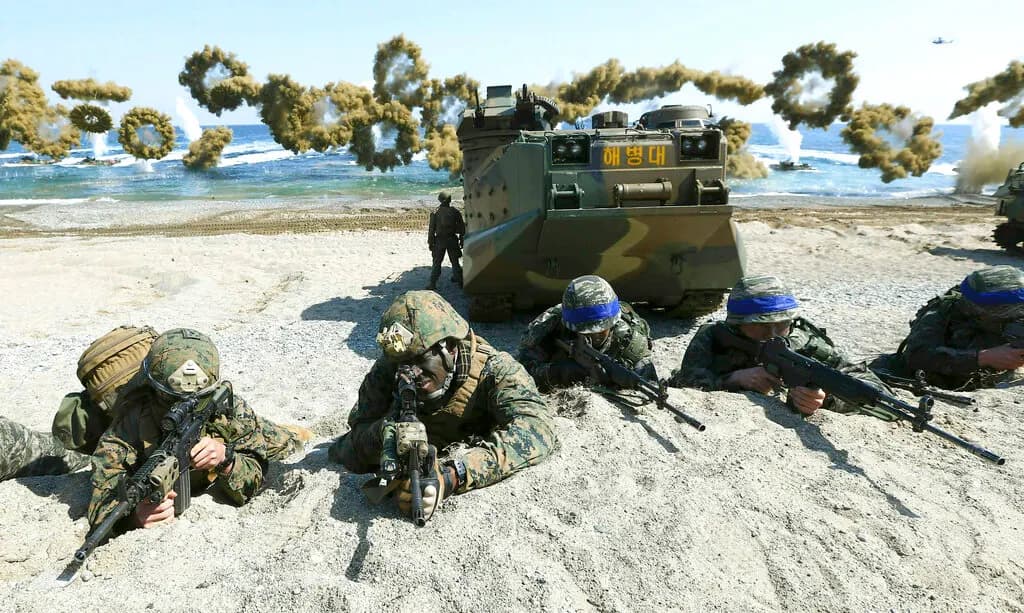
The US and South Korean militaries confirmed Wednesday they were significantly shortening the Ulchi Freedom Shield exercises following a directive from President Trump, who had ordered his Pentagon chief to "substantially reduce" the drills just before they began. South Korean officials said Trump's announcement came without prior notice to either South Korean or US officials, with South Korean Foreign Minister Cho Hyun and Defense Minister Ahn Gyu-back both telling parliamentary hearings that they were not informed before Trump's social media post.
Trump wrote that the drills "send a signal that is totally inappropriate and hostile" to North Korea, which he said "has been unthreatening and respectful" during his second term. He also said he had asked South Korean President Lee Jae Myung whether Seoul would join the US in operations against Iran, and that South Korea declined. The Pentagon said it was "continuing training that enhances tactical capability" but that certain events had been canceled or converted to simulations, adding there would be "no degradation to U.S. training objectives."
Experts offered competing explanations for Trump's move. Victor Cha, Korea chair at the Center for Strategic and International Studies, told Fox News Digital that Trump appeared to see the drill reduction as serving two goals at once — pressuring Seoul on trade and investment commitments while signaling openness to North Korean leader Kim Jong Un. Yang Uk, an analyst at Seoul's Asan Institute for Policy Studies, told the Associated Press the cut was more likely designed to pressure South Korea over Iran: "Trump's message is that if you don't cooperate with us on Iran, we're not cooperating with you."