Trump Seeks to Revive North Korea Diplomacy as Kim's Nuclear Arsenal and Russia Ties Have Grown Since 2018
President Trump has signaled he expects to meet North Korean leader Kim Jong Un before the end of the year, describing his personal relationship with Kim as an asset for restarting diplomacy. North Korea's nuclear arsenal has expanded significantly since their last summit in 2019, and Pyongyang now rejects the denuclearization framework it nominally accepted at the 2018 Singapore summit. North Korea has deepened its military and economic relationship with Russia since Trump's first term, with Pyongyang providing weapons and troops to support Moscow's war in Ukraine.
Single source · Not corroborated
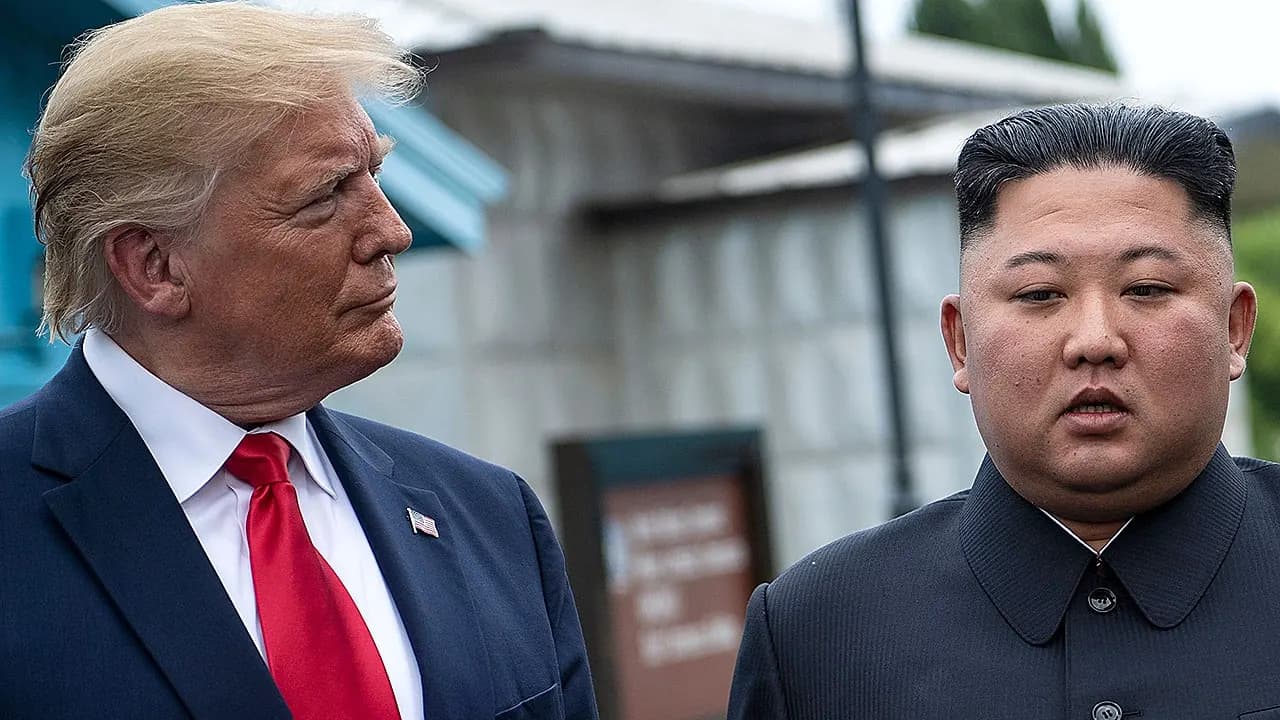
President Trump has reopened outreach to North Korean leader Kim Jong Un, stating this week that he expects a meeting before the end of the year. A White House official told Fox News Digital that the two leaders "will meet at the appropriate time," without providing a date, location, or details about preparations. Trump cited his personal rapport with Kim as a diplomatic asset, saying, "I get along with him. And you know what? The fact that I get along with him, that's a good thing, not a bad thing."
North Korea's position has changed substantially since the pair's earlier meetings. Analysts told Fox News Digital that Pyongyang now holds an estimated 50 to 70 nuclear weapons and multiple delivery systems, and has formally rejected denuclearization as a basis for any negotiation. Victor Cha, Korea Chair at the Center for Strategic and International Studies, described the shift plainly: "There really isn't a military solution for a country like North Korea that has 50, 60, 70 nuclear weapons and several delivery systems for those weapons." Kelsey Davenport, director for nonproliferation policy at the Arms Control Association, added that "North Korea can drive a harder bargain now than it could have in 2018."
A sweeping disarmament agreement is viewed by analysts as unlikely. More limited objectives discussed include a formal ban on nuclear and intercontinental ballistic missile tests, establishing a crisis-management communications channel between Washington and Pyongyang, a peace declaration or treaty, and steps to reduce North Korea's deepening ties with Russia. Davenport said the ideal early step would include a return of International Atomic Energy Agency inspectors, though she characterized that as a longer-term goal rather than an early deliverable.