Trump and Xi Hold Washington Summit Marked by Ceremony and Trade Truce Extension, With Core Tensions Unresolved
President Trump hosted Chinese President Xi Jinping for a two-day state visit in Washington beginning September 23, 2026, which included a black-tie state dinner at the White House and bilateral meetings in the Oval Office. The two leaders agreed to extend by two months a one-year trade truce set to expire November 10 as they work toward a more durable trade agreement. The visit was Xi's first trip to the U.S. capital in over a decade.
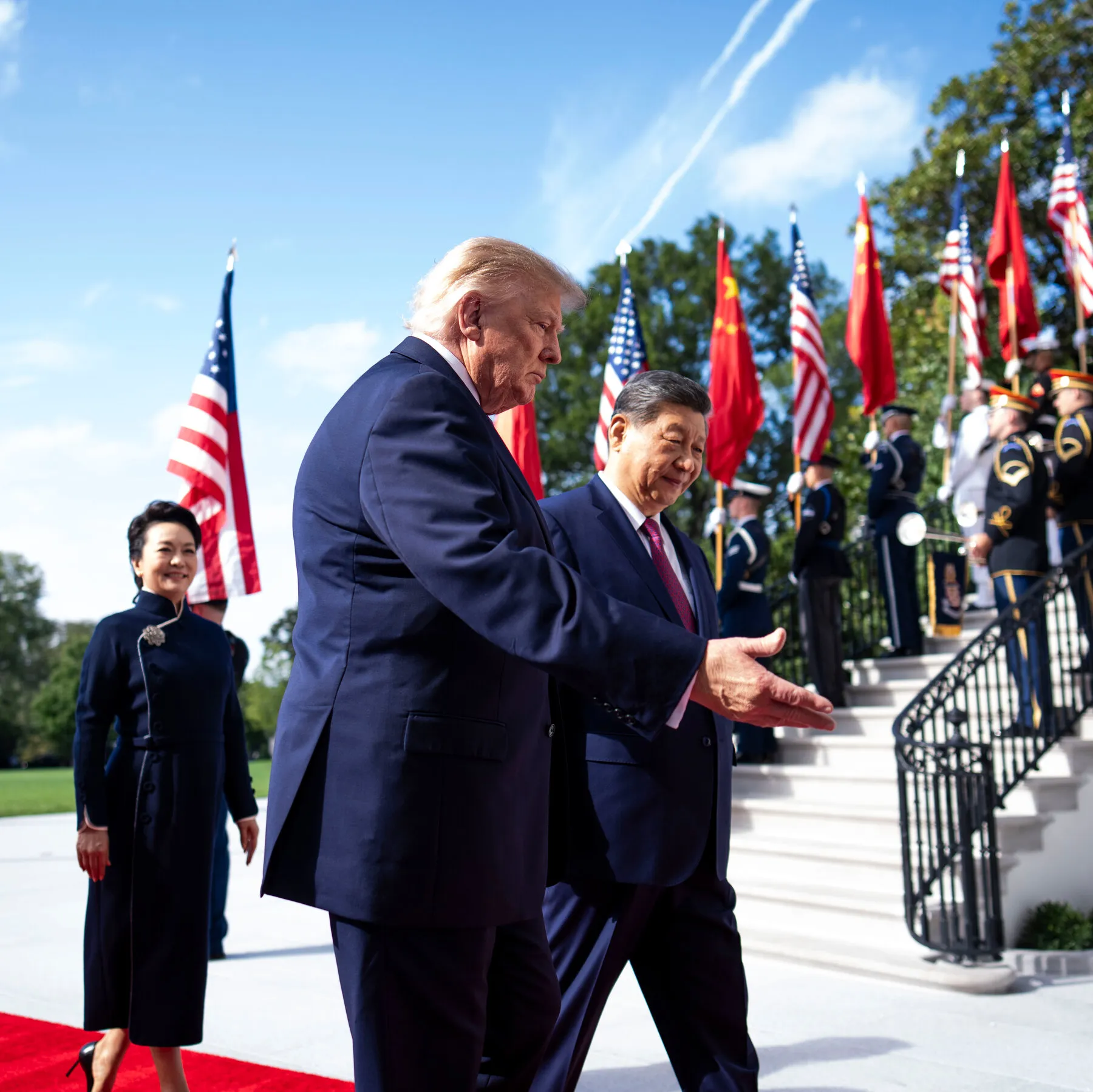
Presidents Trump and Xi met for approximately three hours at the White House on Thursday, following Trump's personal welcome of Xi at Joint Base Andrews on Wednesday — the first time a U.S. president has greeted a foreign dignitary there since 2015. A formal state dinner in the East Room drew roughly 130 guests, including Amazon's Jeff Bezos, Nvidia's Jensen Huang, and Elon Musk, though Chinese business executives were conspicuously absent. Trump gifted Xi a bald eagle statue, and China's side offered two pandas. Friday's schedule included a personal tea and a visit to the National Archives.
Trump described the meeting positively on Truth Social, writing "Very productive meeting with President Xi for both the U.S.A. and China. Tremendous things will be happening." At the state dinner, he toasted "the long relationship between China and America that has bridged thousands of miles and spanned hundreds of years." Xi said Chinese and American interests are "deeply intertwined" and framed Chinese-American competition as one that "should be a healthy one and should be kept within bounds," according to the Associated Press.
Artificial intelligence emerged as a notable point of divergence between the two leaders. Xi said at the White House that both nations have "the capability and responsibility to develop and manage AI for good, and ensure that the development of AI is always under human control," according to the Washington Post. Trump, by contrast, posted on Truth Social that he wanted to leave AI development "exactly where it is," and has previously described fears about AI as a "hoax." Treasury Secretary Scott Bessent discussed with his Chinese counterpart a proposed "notification mechanism" to track AI-related security incidents, according to the Washington Post, though no formal agreement was announced.