U.S. and China agree to lower tariffs on $30 billion in goods after Trump-Xi Washington summit
President Donald Trump and Chinese President Xi Jinping concluded a three-day summit in Washington, D.C., resulting in an agreement to reduce tariffs on $30 billion in goods in both directions. The White House said the reductions apply to "non-sensitive goods" and were negotiated through the U.S.-China Board of Trade. U.S. Trade Representative Jamieson Greer said additional details would be released Monday.
Two sources · Thin corroboration
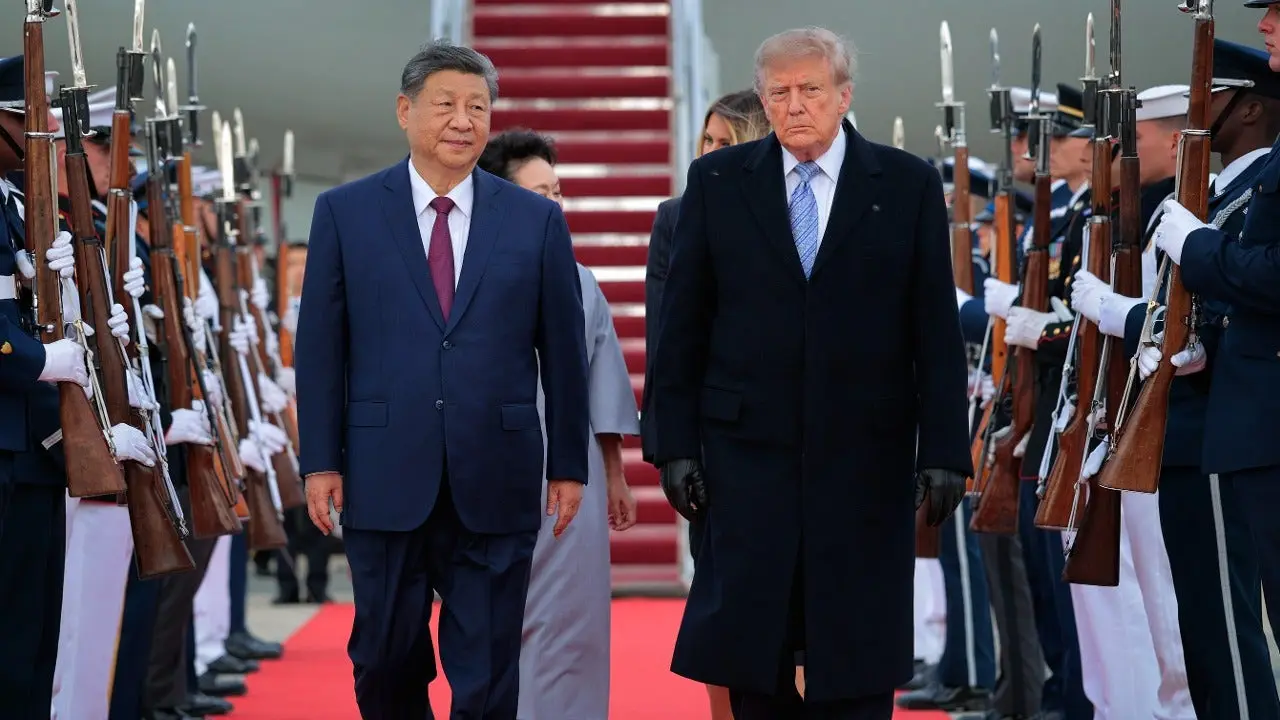
The summit, which included a state dinner at the White House and a tour of the South Lawn, produced a tariff reduction agreement covering U.S. exports such as agricultural products, fish and seafood, logs, wood products, cosmetics, and medical devices, alongside U.S. imports of Chinese-made small appliances, toys, holiday decorations, and children's car seats. The U.S.-China Board of Trade, first proposed during Trump's visit to China in May and formally established this week, will serve as the vehicle for future negotiations. Greer said the specific tariff rates and full product lists had not yet been publicly released.
The deal represents a continued thaw in a trade war that began in February 2025, when Trump imposed a 10% tariff on all Chinese imports, citing Beijing's role in the fentanyl crisis. Tariffs on both sides escalated sharply, reaching 145% on Chinese goods and 125% on U.S. goods by April 2025 before a Geneva truce in May 2025 reduced them to 30% and 10% respectively. That truce was extended in August, and further progress was made at talks in South Korea in October 2025.
A separate but related agreement — the extension of a rare-earth truce — drew notable attention from NPR, which reported that the truce, set to expire in November, was extended by only two months to January. NPR cited reporting indicating that "mutual distrust" prevented a longer extension, a characterization not addressed in Fox News coverage.