Supreme Court hears arguments on whether states and localities can sue oil companies in state court over climate change damages
The Supreme Court heard nearly two hours of oral arguments on whether state and local governments can pursue civil lawsuits against oil and gas companies for climate-related damages in state court, or whether such suits must be filed in federal court. The case before the justices is Suncor Energy Inc. v. Commissioners of Boulder County, CO (25-170), arising from a 2018 lawsuit by Boulder County against Suncor and ExxonMobil. Justice Samuel Alito recused himself from the case after disclosures that he holds stock in oil companies, leaving eight justices to decide the matter.
Two sources · Thin corroboration
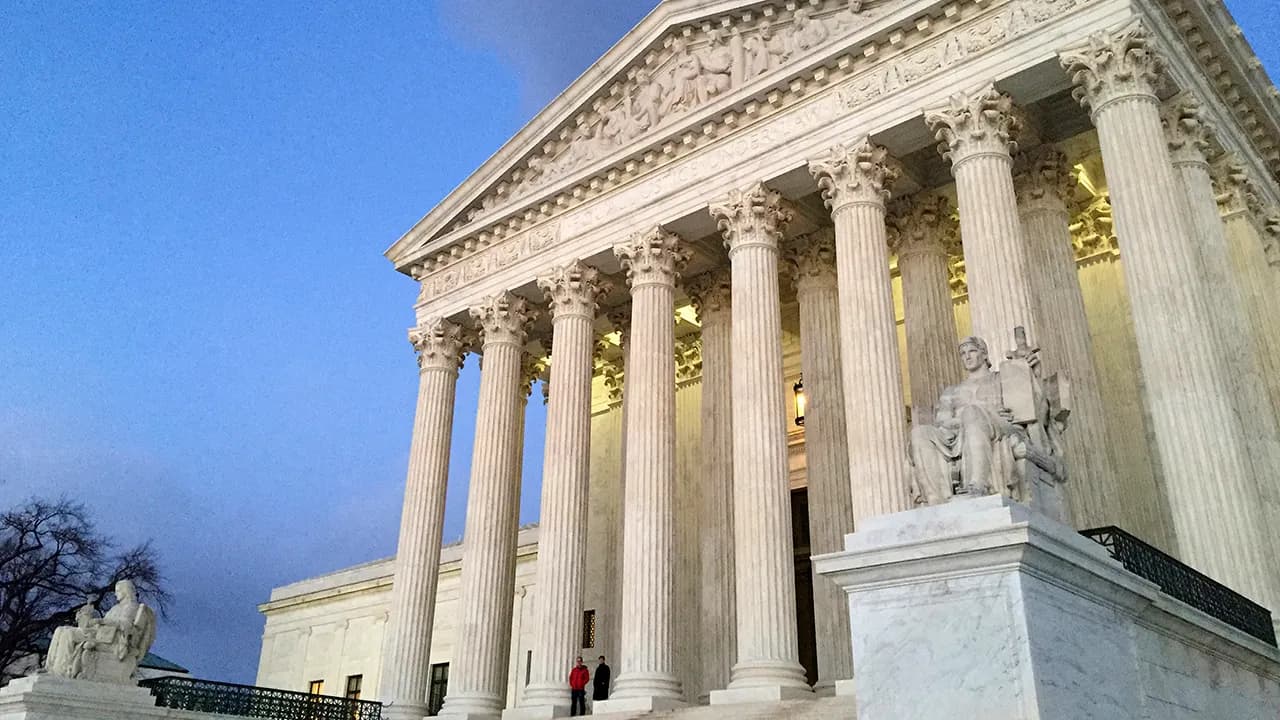
The Boulder County lawsuit, filed in 2018, claims Suncor and ExxonMobil misled the public about their role in climate change and seeks financial damages to help pay for harms including wildfires, rising sea levels, and worsening air pollution. Colorado's highest court had allowed the case to proceed. The suit is one of dozens filed by states and municipalities across the country seeking billions of dollars in civil damages from energy companies.
The central legal question before the court is jurisdictional: whether these climate liability claims belong in state court, where plaintiffs have pursued them, or in federal court, where similar suits have been dismissed. The companies, backed by the Trump administration, argue that emissions are a national issue governed by federal law, specifically the Clean Air Act, and that the Constitution limits what individual states and counties can do. Sarah Harris, a Justice Department lawyer, told the court that "interstate air pollution is an inherently federal area" and that the Boulder County suit "egregiously exceeds constitutional limits on state authority."
Chief Justice John Roberts emerged as a potential deciding vote, asking pointed questions of both sides. He noted that the court has historically allowed similar multi-state impact claims to proceed in state court, saying, "There are a lot of familiar situations where conduct outside of the state has broad effects among other states, and yet we allow state courts in a particular state to bring litigation." With Alito recused, a 4-4 split would leave Colorado's ruling in place, allowing the Boulder County case to move forward in state court. Justice Ketanji Brown Jackson also raised a procedural question, asking why the court should not wait for state courts to resolve outstanding federal issues before stepping in.